How LEM Reduces Its Carbon Footprint on the Path to Net Zero 2040
LEM’s Commitment to a Low Carbon Future
As global industries accelerate their shift toward electrification and low‑carbon technologies, LEM is taking decisive steps to reduce its environmental footprint while enabling its customers to do the same. LEM is executing a sustainability strategy rooted in measurable action, innovation, and transparency across the 3 scopes of emissions to reach net zero for Scope 1 & 2 by FY2025/26 and net zero for Scope 3 by FY2040/41.
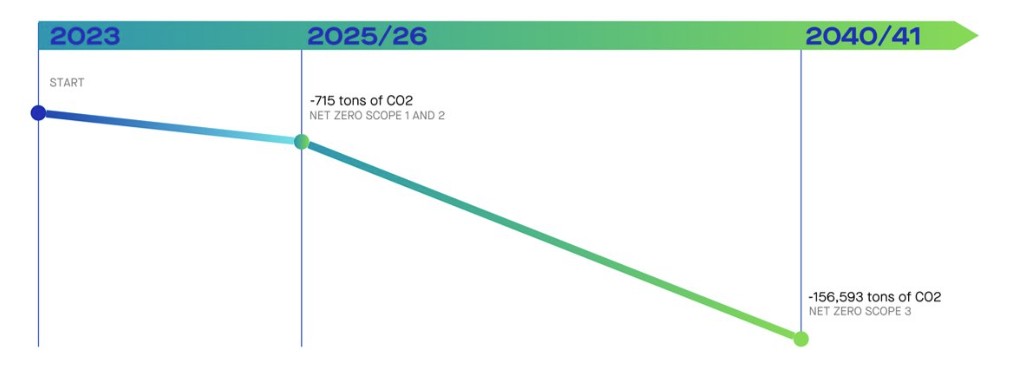
Over the last two years, LEM has made rapid progress toward decarbonizing its operations. The company achieved an 81% reduction in Scope 1 & 2 market‑based emissions compared to its 2023 baseline, driven by a shift to renewable electricity, electrification of its vehicle fleet, and major improvements in building efficiency. At the same time, LEM is addressing the more complex challenge of Scope 3 emissions by transforming its logistics, partnering more closely with suppliers, and innovating to reduce product‑related emissions.
Cutting Scope 1 & 2 Emissions: Rapid Progress Toward Net Zero 2025
Transition to 99% Renewable Electricity
In 2024, LEM reached a major milestone: 99% of its electricity consumption came from renewable sources, enabling a 97% reduction in Scope 2 market‑based emissions. This transformation was achieved through on‑site solar installations in Geneva, Penang and Beijing, direct procurement of green electricity, and the use of Energy Attribute Certificates to cover remaining needs. Renewable electricity has now become the backbone of LEM’s operational footprint.
Electrification of the Vehicle Fleet
To further cut direct emissions, LEM accelerated the replacement of internal combustion engine vehicles with electric models. This transition contributed to a 23% reduction in Scope 1 emissions, demonstrating how operational decisions can directly support the company’s decarbonization targets.
Energy‑Efficient Buildings: Minergie HQ & Global Improvements
Energy efficiency is another key lever. LEM’s headquarters in Geneva is now located in a Minergie‑certified building, reducing electricity consumption by over 50% annually and our site in Penang, Malaysia received a Green Building Index label Across manufacturing sites, energy‑saving technologies and expanded solar capacity continue to support LEM’s ambition to achieve net zero Scope 1 & 2 emissions by FY2025/26, without compromising operational performance.
Reducing Scope 3 Emissions: Driving Change Across the Value Chain
Lower‑Carbon Logistics (Shift from Air to Sea/Rail)
Logistics is a significant driver of Scope 3 emissions. Over the past year, LEM intensified efforts to reduce transport‑related emissions by shifting intracompany freight from air to sea and rail. This strategic shift resulted in a 37% reduction in emissions per ton of transported goods, improving both environmental impact and supply chain resilience.
Supplier Engagement and Sustainable Procurement
Since purchased goods and services account for 31% of LEM’s Scope 3 emissions, supplier engagement is central to its net‑zero strategy. In 2024, LEM strengthened its sustainable procurement approach with a new Procurement Risk Assessment, updated ESG requirements, and a supplier sustainability questionnaire targeting 150 partners.
Rather than excluding lower‑maturity suppliers, LEM focuses on collaboration, supporting them in building action plans and aligning with LEM’s long‑term climate objectives.
Product Innovation to Reduce Use‑Phase Emissions
A substantial share of Scope 3 emissions comes from the purchased goods & services (S.3-Cat.1) and the use of sold products (S.3-Cat.11). LEM addresses this through miniaturization, making sensors smaller, lighter, and more efficient, as well as partnering with leading institutions such as EPFL to reduce material use and redesign components for circularity.
Combined, these innovations help customers reduce energy consumption across applications like electric mobility, renewable energy, and industrial automation, lowering emissions well beyond LEM’s direct control.
Learn More About LEM’s Net Zero Journey
LEM is delivering measurable progress on its path to net zero, with concrete actions across Scope 1, 2, and 3 emissions. Sustainability is embedded in how the company operates, innovates, and partners across its value chain.
Download LEM’s Sustainability Report 2024/25 to explore the data, targets, and actions behind this commitment in full.